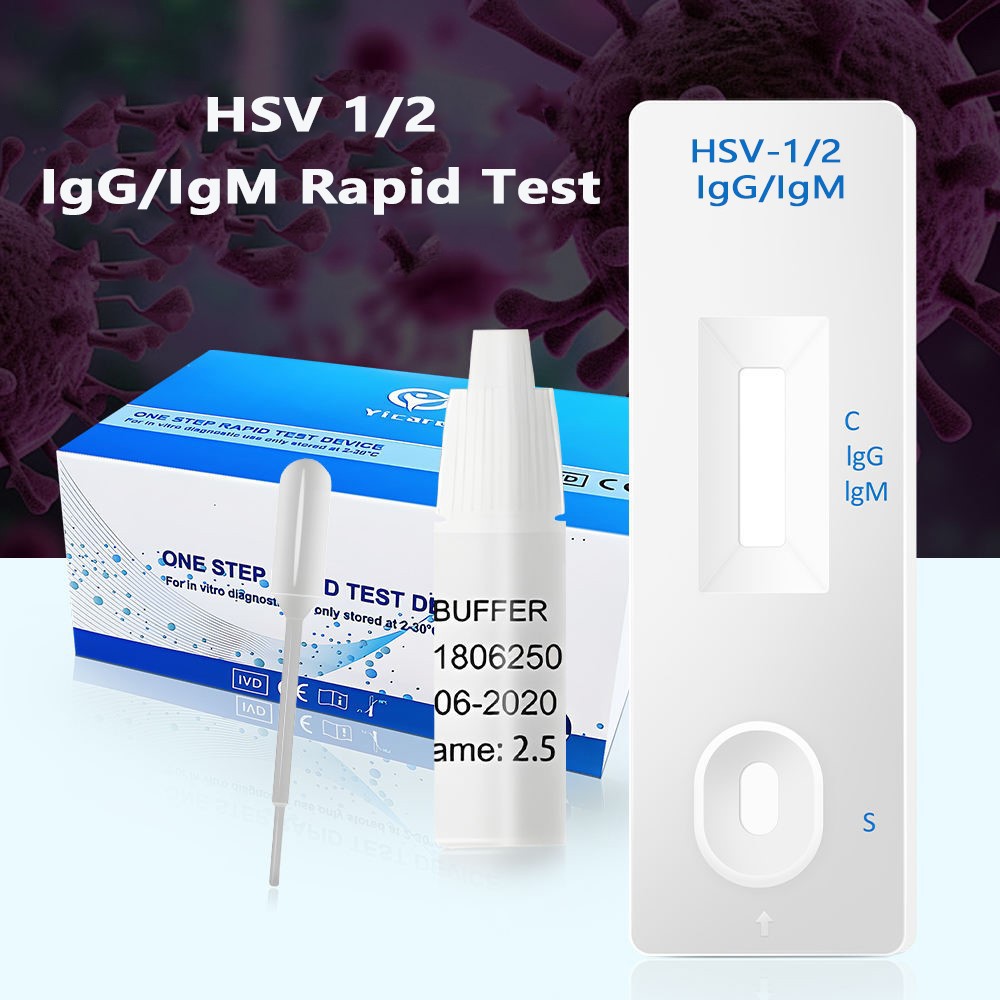

If you've taken a home-based or clinical rapid test for Herpes Simplex Virus (HSV), you've likely seen the terms IgG and IgM. But what do they actually mean? Here's a quick guide.
HSV-1 vs. HSV-2
HSV-1: Often causes oral cold sores, but can also affect the genital area.
HSV-2: Primarily associated with genital herpes.
Both types are manageable, and knowing your status is the first step.
IgM vs. IgG: The Difference
Your body produces two types of antibodies in response to the virus:
IgM (The Early Alert): This appears shortly after infection (within 1-2 weeks). A positive IgM may suggest a recent initial infection or, in some cases, a reactivation.
IgG (The Memory Marker): This develops later (around 3-4 weeks) and stays in your blood for life. A positive IgG means you have been exposed to the virus at some point.
Reading Your Results
IgG Negative / IgM Negative: Likely no infection, but you could be in the "window period." Test again in 4 weeks if concerned.
IgG Negative / IgM Positive: This often points to a very recent infection.
IgG Positive / IgM Negative: Past exposure. The virus is in your system, but you aren't newly infected.
IgG Positive / IgM Positive: Could be a late-stage recent infection or a reactivation.
A Note on Accuracy
Rapid tests are convenient, but timing matters. For the most reliable result, test 4 to 6 weeks after potential exposure. If you have active blisters or sores, a PCR swab test is more accurate than a blood test.
The Bottom Line
A positive HSV result is common and manageable. It doesn't define your health. Speak to a healthcare provider to understand your options and how to reduce transmission risks.